


Description
Refrigerant Leak Detector – Electronic HVAC Sniffer Tool
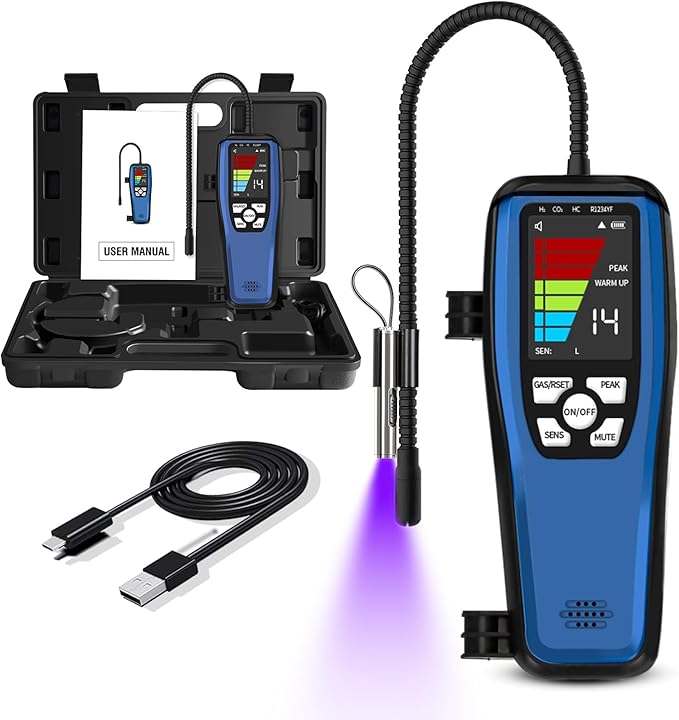
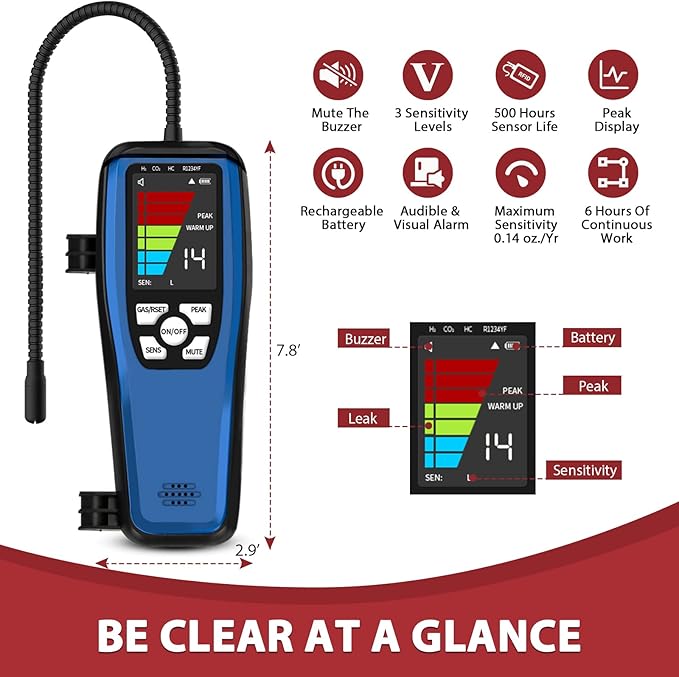
The Refrigerant Leak Detector is an essential diagnostic instrument for HVAC and refrigeration technicians. This highly sensitive electronic HVAC sniffer identifies even the smallest refrigerant leaks in systems using R22, R134a, R404A, R410A, and other common refrigerants. With its fast response time and advanced sensor technology, the detector helps pinpoint leaks before they cause major cooling failures.
Designed for field durability, the leak detector features adjustable sensitivity, an ergonomic handle, and a flexible probe for accessing tight spaces. By quickly identifying leaks, technicians can prevent refrigerant loss, reduce system stress, and maintain peak cooling efficiency.
Key Features
-
High Sensitivity: Detects small refrigerant leaks instantly.
-
Flexible Probe: Reaches tight or hidden areas with ease.
-
Multi-Refrigerant Compatibility: Works with most HVAC refrigerants.
-
Audible and Visual Alerts: Provides clear leak notifications.
-
Field-Ready Design: Durable, lightweight, and reliable for daily use.
Applications and Benefits
Ideal for:
-
Air conditioners
-
Heat pumps
-
Commercial refrigeration
-
Automotive AC
-
Chillers and walk-in coolers
Benefits include:
-
Preventing compressor damage
-
Reducing refrigerant waste
-
Ensuring environmental compliance
-
Improving cooling performance
Installation & Usage Tips
-
Turn on the detector and allow warm-up time.
-
Move the probe slowly along joints, fittings, and coils.
-
Follow the alerts to pinpoint the leak.
-
Repair the leak and re-test for confirmation.
Internal and Outbound Links
-
Explore more HVAC Tools & Instruments in our Technician Equipment Collection.
-
Learn about leak detection methods at:
https://www.achrnews.com
Summary
The Refrigerant Leak Detector makes it easy for technicians to locate leaks quickly and accurately. Its sensitivity, reliability, and multi-refrigerant compatibility make it an essential tool for HVAC professionals.
Reviews
There are no reviews yet.